Research at AstroAI
AI for discovery at every scale
AstroAI develops and applies modern artificial intelligence methods to questions across astrophysics. Our work spans discovery in complex data, fast scientific inference, and tools that connect observations, simulations, and knowledge.
Research areas
Exploring the universe with AI
Each focus area pairs scientific questions with methods built for the scale and complexity of modern data.
Focus area 01
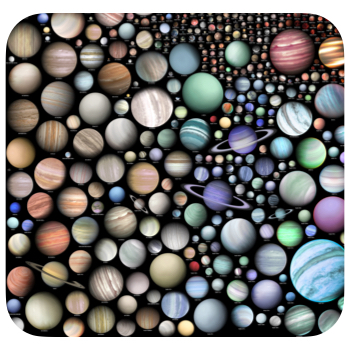
Biosignatures in Exoplanet Atmospheres
Machine-learning methods can help identify chemical signatures in complex atmospheric observations and guide the search for potentially habitable worlds.
Focus area 02
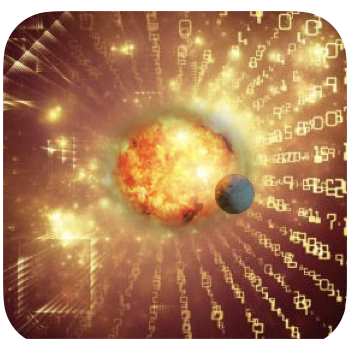
StarsAI
Data-driven models offer new ways to interpret stellar spectra, characterize stars, and learn from the scale of modern sky surveys.
Focus area 03
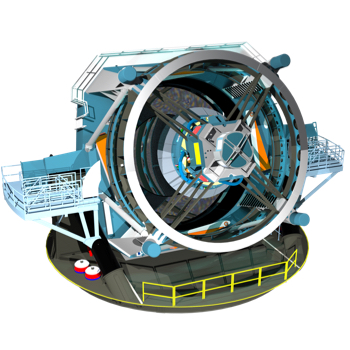
Dynamic Sky
Fast, intelligent analysis helps detect and classify transient events as telescopes reveal an increasingly time-variable universe.
Focus area 04
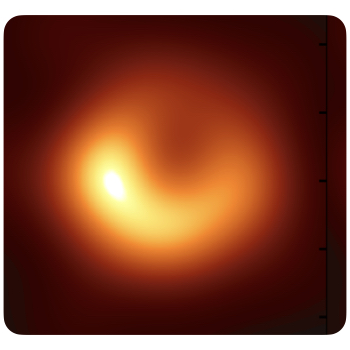
Black Holes
AI connects observations and simulations to study black-hole environments, accretion, and the physics of extreme gravity.
Focus area 05
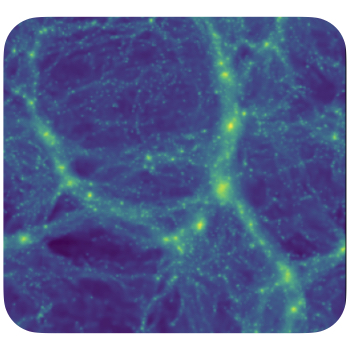
Cosmology
Learning from large surveys and simulations can sharpen measurements of the universe's structure, composition, and evolution.

Focus area 06
Multi-Modal LLMs for Astronomy
Models that work across text, images, tables, and scientific data can make astronomical knowledge easier to explore and connect.

Focus area 07
GravAI
Machine learning can help us solve differential equations to find solutions to gravity beyond General Relativity.
Focus area 08
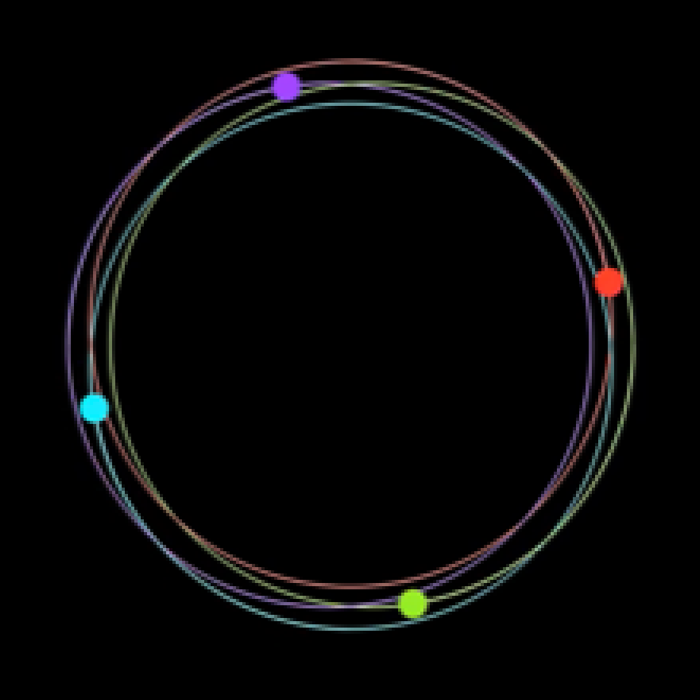
Physical GenAI
Generative models built around physical laws can emulate costly simulations and produce synthetic data that stays faithful to the underlying physics.